 Shqip
 English
 Italiano
Buying off-plan in Albania: contracts, payments and risks
Redaksia e Reale.al · · ⏱ 7 min read
Off-plan prices are lower, but the risks are higher. How the kontrata e sipërmarrjes works, how staged payments are structured and what guarantees to ask for.
In short
- Off-plan, you sign a works contract (kontrata e sipërmarrjes) at a notary; you only own the flat once the ownership certificate is issued.
- Check the building permit, land ownership and any agreement with the landowners.
- Tie instalments to real construction stages and pay only by bank transfer.
- Do not count on a bank guarantee: negotiate penalties and a final payment on registration.
- Always use an independent lawyer as well as the notary.
A large share of the apartments sold today in Tirana and along the Albanian coast are bought off-plan, while the building is still a construction site or even just a set of drawings. Prices are usually more attractive and you get first pick of floors and views. The trade-off is that you are handing a developer money for something that does not exist yet. This guide explains how the "kontrata e sipërmarrjes" works, how payments are usually staged, what guarantees you can ask for and how to reduce the risks. It is not a substitute for advice from a notary or lawyer, whom you should always involve. You can browse developments under construction on Reale.al in our new developments section.
What does buying off-plan in Albania involve?
Buying off-plan means signing with the developer before the flat is finished and paying in instalments as construction progresses. The flat only becomes legally yours at the end, once the building receives its occupancy permit and the unit is registered with the cadastre. Until then, what you hold is a contract, not an ownership certificate. That is the key difference from buying a completed property, which we compare in our guide to new build vs resale in Albania.
What is a "kontrata e sipërmarrjes"?
In Albanian practice, the relationship between a buyer and a developer for a flat under construction is usually formalised through a kontratë sipërmarrjeje, a works or construction contract signed before a notary. Under it, the developer undertakes to build and hand over a specific unit with defined features, in exchange for a price paid on an agreed schedule. Which legal provisions apply and what protection they give you is something the notary or a lawyer should explain before you sign. If you are used to off-plan protections in the UK or elsewhere in the EU, do not assume the same safeguards exist in Albania.
Be aware that the same term is also used for a different agreement: the one between landowners and the developer, in which the owners contribute the plot and receive flats in return. It matters to you as a buyer because it shows whether the developer actually has the right to build and sell the units on offer.
What should the contract include?
- A precise description of the flat: floor, unit number, orientation, net and gross floor area, with the floor plan attached.
- A finishing specification: flooring, windows, doors, bathrooms, heating and cooling, common areas.
- The total price, the currency and a payment schedule tied to construction stages.
- The completion date and penalties for each month of delay.
- What happens if the final floor area differs from the contract, with a written tolerance.
- The developer's obligation to obtain the occupancy permit and register the flat in your name by a set deadline.
- Termination terms and refund conditions for both parties.
Which documents should you ask for before signing?
- Building permit (leja e ndërtimit): issued by the competent authority, which depends on the size and location of the project; a lawyer can help you verify it. Check that the number of floors and units matches the project you are being shown. Ask the notary or a lawyer how to check the permit against official sources.
- Proof of land ownership: the ownership certificate for the plot, showing who owns it and whether there are mortgages or other encumbrances. Our guide to the ownership certificate and mortgages explains how to read it.
- The agreement with the landowners, if the developer does not own the plot: make sure your unit is not one of those allocated to the landowners.
- Company records for the developer from the National Business Centre (QKB), showing the director and the company's status.
- The approved project and floor plans, not just the marketing brochure.
How are off-plan payments usually staged?
There is no compulsory schedule: it is negotiated with the developer. The most common approach links instalments to construction progress, so you never pay far more than the value of what has actually been built.
| Stage | What happens | What to check |
|---|---|---|
| Reservation / deposit | You secure the unit, often with a preliminary agreement | When and on what terms the deposit is refundable |
| Signing at the notary | Works contract signed, first payment made | Building permit and land documents |
| Structural frame | The building's skeleton is complete | That the stage has genuinely been reached, with a site visit |
| Finishing works | Façade, services, plastering | That work matches the specification |
| Handover | Handover report and keys | Defects recorded in writing |
| Registration | Ownership certificate in your name | That the final payment is tied to this step |
Always pay by bank transfer to the company's account, never in cash, and keep every receipt. If you plan to borrow, run the numbers first with our mortgage calculator; whether and how an off-plan flat can be financed is up to the bank, so ask before you sign with the developer.
What guarantees can you ask the developer for?
In Albania, bank guarantees protecting off-plan buyers and escrow accounts are not something you can take for granted: ask the developer and your lawyer whether they are available for your project. Your protection therefore depends mainly on how well the contract is drafted and on the developer's reliability. Points worth negotiating:
- Clear delay penalties, calculated per month, and the right to terminate after a prolonged delay.
- A bank guarantee or insurance on the sums paid, where the developer is willing to provide one.
- Registration of the contract or a note on the property register, to guard against double selling; the notary will confirm whether this is possible in your case.
- A final payment tied to the certificate: the last instalment is due only once the flat is registered in your name.
- A defects warranty after handover, with a duration written into the contract; your lawyer can tell you what warranty the law also provides.
What are the main risks of buying off-plan?
- Delays: by far the most common. A year's delay means a year of rent or loan repayments with no home to show for it.
- Changes to the project: extra floors, altered layouts, cheaper materials than promised.
- Double selling: the same unit promised to two buyers.
- A mortgage on the land or building from the developer's construction loan, which must be lifted before registration.
- Developer financial trouble, which can halt the site.
- Delays to the occupancy permit and therefore to your ownership certificate, even after you have moved in.
How can you reduce the risks in practice?
- Research the developer: visit projects they have completed and ask residents whether they got their keys on time and whether they have their ownership certificates.
- Hire your own lawyer, independent of the developer, to review the contract before you sign at the notary. If you do not read Albanian, ask for a translation.
- Tie payments to real progress and visit the site before each instalment.
- Do not pay most of the price up front, even if you are offered a discount for paying in full.
- Get every promise in writing: parking space, storage, finishes, deadlines. If it is not in the contract, it does not exist.
- Budget for the extras: notary, registration, furnishing. Our guide to buying costs and taxes helps. Ask too whether the price includes VAT and get the answer in the contract.
- Do not sign the handover without checking: record every defect in the report along with a deadline for fixing it.
What happens after you get the keys?
Once the building is complete, the developer must obtain the occupancy permit and register the units with the cadastre. In some cases a final sale and purchase contract is signed; in others registration is based on the works contract and the completion documents. Ask the notary which procedure applies to you and who pays which fees. Only once the ownership certificate is in your name is the flat fully yours: you can sell it, mortgage it or leave it to your heirs without obstacles.
How do you find and compare developments on Reale.al?
Developers on Reale.al have dedicated "Rezidenca" pages for projects under construction, where you can see available units and contact the seller directly. You will find them all in the new developments section, and the agency directory lists the professionals who market them. Every listing is automatically translated into English. Agents with a verified licence carry a badge; we explain the process on our how we verify page. Save the projects you like to your favourites with notes and switch on price-drop alerts.
Frequently asked questions
Do I own the flat as soon as I sign the kontrata e sipërmarrjes?
How much do I pay up front?
What if the developer is late?
How do I check the building permit?
Can I buy off-plan if I live abroad?
Latest listings
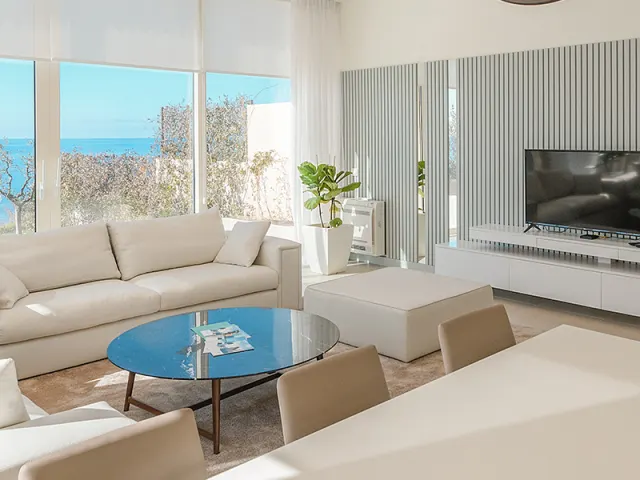
€335.000
€4.136/m²
1+1 Apartment, 81 m² – Green Coast 2, Palasë
Green Coast 2, Himara
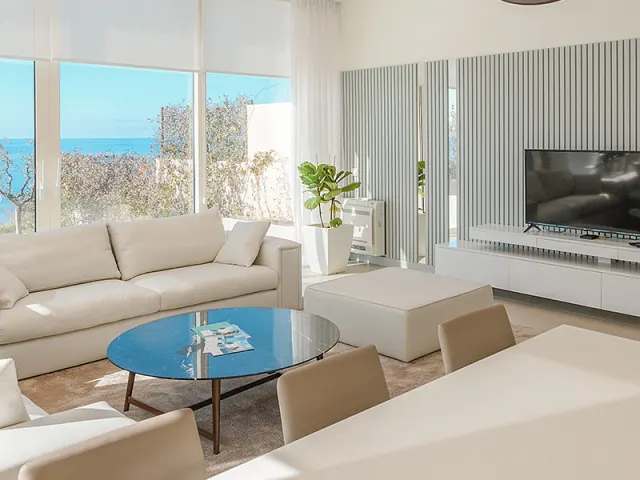
€670.000
€6.204/m²
1+1 Apartment, 108 m² with 121 m² Terrace – Green Coast 2, Palasë
Green Coast 2, Himara
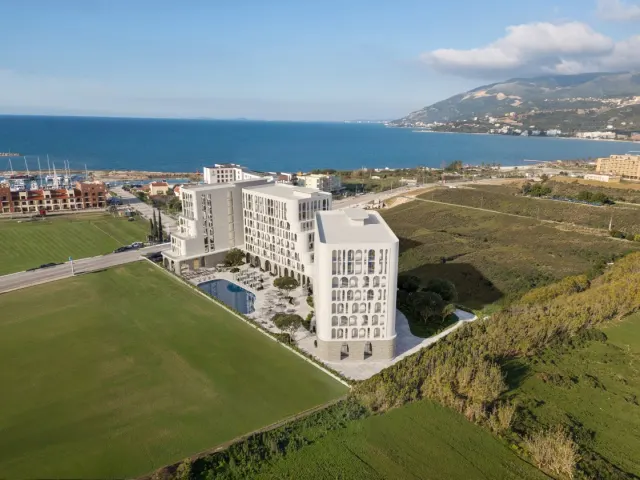
€298.700
€2.510/m²
2+1 Apartment, 119 m² with 26 m² Balcony Facing the Port – Orikum Bay, Vlorë · €298,700
Orikum, Vlora
€286.752
€2.410/m²
2+1 Apartment, 119 m² with 26 m² Balcony Facing the Port – Orikum Bay, Vlorë · €286,752
Orikum, Vlora