 Shqip
 English
 Italiano
Capital Gains Tax on Selling Property in Albania: Seller's Guide
Redaksia e Reale.al · · ⏱ 8 min read
What tax do you pay when selling property in Albania? How the capital gain is calculated, when it is paid and what other costs sellers should expect.
In short
- Tax is due on the gain (sale price minus purchase price), not on the full price; confirm the current rate with a notary or accountant.
- The seller pays; the notary will tell you when and how.
- For inherited or privatised property the starting value may be calculated differently: ask the notary.
- Other costs: notary, ownership certificate, agency commission, unpaid bills.
- Foreign owners should also check reporting rules in their home country.
When you sell an apartment, a house or a plot of land in Albania, the price the buyer pays is not what ends up in your account. Capital gains tax, notary fees, the land registry, any agency commission and unpaid utility bills all come out of it. This guide explains how tax on selling property in Albania works, what other costs fall on the seller, and how to prepare so the signing at the notary goes smoothly.
One important caveat: Albania's property tax rules can change. That is why this guide does not quote rates or deadlines: every figure for your case must be confirmed with a notary, an accountant or the tax administration before you sign. Use this guide to ask the right questions, not as a substitute for professional advice. This matters even more if you are a foreign owner selling from abroad.
Do you pay capital gains tax when selling property in Albania?
In general, yes. When an individual sells real estate for more than they paid for it, the difference is treated as a capital gain and taxed as personal income under Albania's income tax rules. The current rate, how the taxable base is calculated, which exemptions exist and how reference prices are used all need to be checked for your specific case with a notary or an Albanian accountant.
This tax is separate from what the buyer pays. Buyers have their own costs, covered in our guide to property buying costs and taxes in Albania. Here we focus only on the seller's side.
How is the taxable gain calculated?
The principle is straightforward: the gain is the sale value minus the acquisition value. In practice, each part of that formula has its own details.
| Item | What it means | What to check |
|---|---|---|
| Sale value | The price stated in the notarised sale contract | Ask the notary what happens if the declared price is below the official reference price |
| Acquisition value | What you paid when you acquired the property, as shown in the deed | For privatised, inherited or gifted property, ask the notary how it is set |
| Deductible costs | Documented costs related to the property | Ask an accountant whether renovation or other costs can be deducted, and with what paperwork |
| Capital gain | Sale value minus acquisition value (and allowed deductions) | If the result is zero or negative, have the notary confirm that no tax is due |
| Tax due | Capital gain multiplied by the rate | The rate in force on the date of sale, confirmed by a notary or accountant |
If you bought years ago at a low price and sell today at market value, the gain can be substantial. If you bought recently and resell at a similar price, the taxable gain may be small. To see what your property is worth today, try the free home valuation tool and the revaluation calculator, which shows how the value has changed since you bought.
Reference prices versus the declared price
Albania uses official reference prices for real estate, set by area. How that reference affects the tax when the contract price is far below it is something a notary or accountant can explain. Understating the price in the contract to save tax is therefore a bad idea. It exposes the seller to legal risk and leaves the buyer with a deed that does not match what they paid, which causes trouble when they apply for a mortgage or sell later. The reference price tool on Reale.al helps you find the official reference prices for your area, as a starting point for your conversation with the notary.
What if the property was inherited or gifted?
Many homes on the Albanian market were inherited from parents or acquired through the privatisation of the 1990s. In these cases there is no clear purchase price. The starting value may be the one stated in the inheritance documents or deed of gift, or a reference value; which one applies is for the notary to determine under current law. Before setting your asking price, ask the notary how the base will be calculated in your case, because it can change the tax considerably.
Co-owned property, common with family inheritances, needs extra care. Ask the notary how the tax is split between co-owners; in any case all of them must attend the notary or be represented by power of attorney.
Who pays the tax, and when?
Capital gains tax on the sale is the seller's obligation. Payment is tied to the transfer of ownership and its registration with the State Cadastre Agency (ASHK). Ask the notary before completion day exactly when it is due, how much it is and what receipt proves payment, so the registration is not delayed.
This means the seller needs the cash to pay at the right moment, or must agree with the buyer that part of the price is paid before registration. Put the payment schedule in writing in the contract.
What other costs does a seller face?
Capital gains tax is not the only cost. These are the items to budget for. Who pays what is often a matter of agreement between the parties, so spell it out in the contract.
| Cost | Usually paid by | Note |
|---|---|---|
| Capital gains tax | Seller | Rate and base confirmed by a notary or accountant |
| Notary fee | By agreement between the parties | Ask the notary for the fee in advance |
| Updated ownership certificate | Seller | Issued by ASHK; ASHK will tell you the fee |
| Agency commission | As per the agency agreement | Agreed with the agency; put it in writing |
| Arrears (water, electricity, local taxes, building maintenance) | Seller | The buyer or notary may ask for certificates showing no debts |
| Power of attorney | Seller | Needed if you cannot be in Albania for the signing |
| Translations and apostille | Seller, if documents are foreign | Common for foreign owners and the diaspora |
| Mortgage release | Seller, if there is a loan | The bank issues a discharge document |
If the property still carries a bank mortgage, it must be cleared before or during the sale; see our guide to the ownership certificate and mortgages. For the full paperwork list, read documents needed to sell a property.
Are there any exemptions?
Sellers often ask whether a main home or a property held for many years is exempt, because many countries have such rules. Do not assume the same applies in Albania: whether any exemption exists must be checked with a notary or accountant against the current law. Do not rely on what a friend was told when they sold a few years ago either, since the rules may have changed. Ask the notary or an Albanian accountant for a written calculation before you sign a preliminary contract.
I am a foreign owner: where do I pay tax?
Where tax is paid on property located in Albania, and what you must report at home, depends on the rules of both countries. Your country of tax residence may also require you to report the gain; double taxation treaties exist, but whether and how one applies to you is something only a tax adviser can confirm. Check with a tax adviser in both countries and keep the notarised deed and proof of the Albanian payment. Our guides on foreigners and property in Albania and bank accounts and transfers cover the practical side, including moving the proceeds abroad.
If the property is owned by a company, the proceeds go into the company's accounts and follow business tax rules; whether VAT also applies, and how, is for the company's accountant to determine.
How should you prepare before listing?
- Find the title deed showing how you acquired the property (purchase contract, inheritance, gift, privatisation) and check the price stated.
- Request an updated ownership certificate and make sure the area and details match reality.
- Ask the notary for a written estimate of the tax and other costs.
- Settle any arrears for water, electricity, local taxes and building fees, and keep the receipts.
- Set your price knowing your net figure. Our guide on how to price your property helps you compare with the market.
- Decide whether to sell privately or through an agent, compared in agency or private sale.
How much will you actually take home?
A simple method: start from the expected sale price and subtract the agency commission (if any), capital gains tax, arrears, the document and notary costs you have agreed to pay and any loan payoff. What is left is your net amount. If you plan to buy again, combine this with the buying costs calculator and the mortgage calculator for the full picture.
The price you can ask depends on the area, floor, view, condition and paperwork. To get your bearings, look at the city price pages with official reference prices, real listings for sale with their asking prices, the Bank of Albania house price index and INSTAT statistics.
Listing your property on Reale.al
Once the paperwork is in order and you know the net figure you want, you can publish your listing. Private sellers list for free on the Fillestar plan, and every listing is translated automatically into Albanian, English and Italian, so both local and foreign buyers can read it. Stating that the property has an ownership certificate is something serious buyers notice straight away. Start with publish a listing or read the page for property owners.
Frequently asked questions
What is the capital gains tax rate on property in Albania?
Does the buyer or the seller pay capital gains tax?
Is there an exemption for selling my main home?
How is tax calculated on an inherited property?
I live abroad. Will I be taxed twice?
Can I put a lower price in the contract to pay less tax?
Latest listings
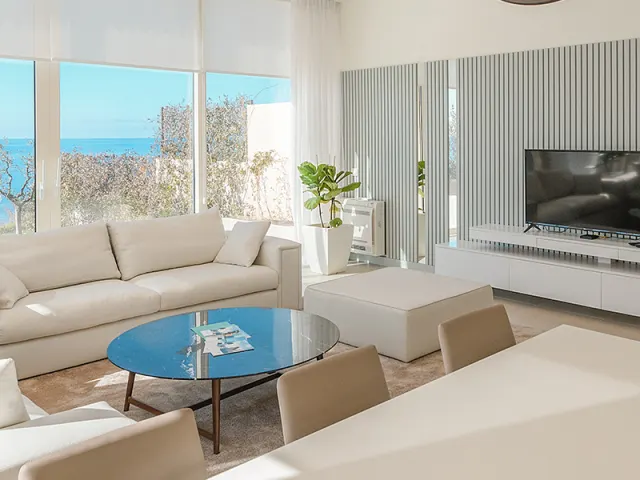
€335.000
€4.136/m²
1+1 Apartment, 81 m² – Green Coast 2, Palasë
Green Coast 2, Himara
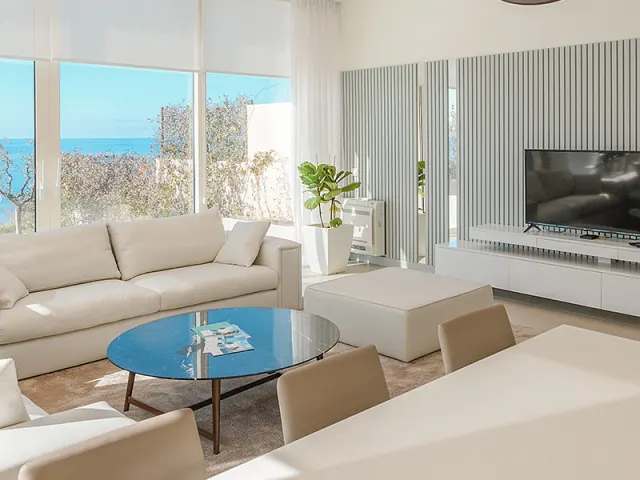
€670.000
€6.204/m²
1+1 Apartment, 108 m² with 121 m² Terrace – Green Coast 2, Palasë
Green Coast 2, Himara
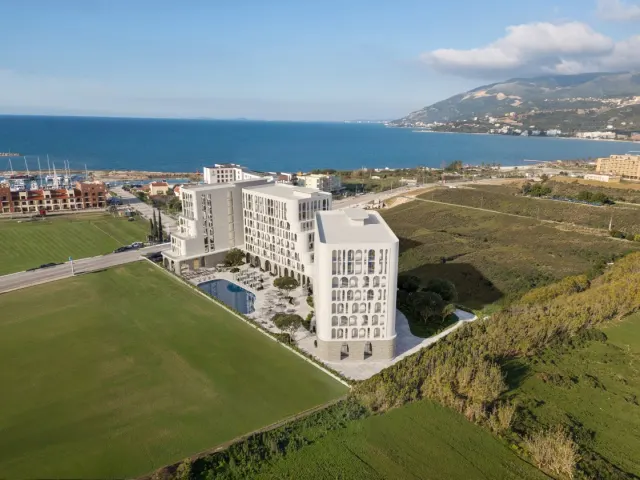
€298.700
€2.510/m²
2+1 Apartment, 119 m² with 26 m² Balcony Facing the Port – Orikum Bay, Vlorë · €298,700
Orikum, Vlora
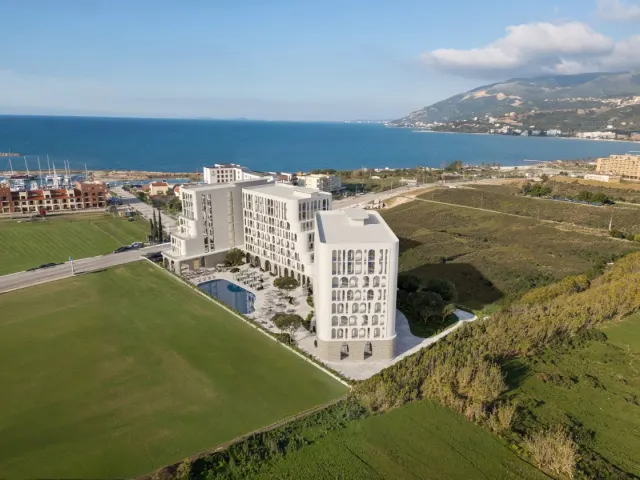
€286.752
€2.410/m²
2+1 Apartment, 119 m² with 26 m² Balcony Facing the Port – Orikum Bay, Vlorë · €286,752
Orikum, Vlora