 Shqip
 English
 Italiano
Mortgages in Albania: banks, rates and documents explained
Redaksia e Reale.al · · ⏱ 7 min read
How mortgages work in Albania: how rates are set, lek or euro, documents for the diaspora and foreign buyers, the steps to completion and comparing offers.
In short
- Rates combine a reference rate and the bank's margin; compare the annual effective rate.
- Borrow in the currency you earn where possible.
- Albanians abroad can borrow with translated, apostilled income documents.
- Non-resident foreigners can find it harder to borrow: ask the banks directly.
- Test your payment in the mortgage calculator, including a higher rate.
Getting a mortgage in Albania works differently from the UK, US or most of the EU. Banks at home rarely lend against property abroad, and Albanian banks have their own rules, with loans in both lek and euros. This guide is for two groups: Albanians living abroad who want to buy at home, and foreign buyers considering Albanian real estate who want to know whether financing is realistic. We explain how a home loan works, how interest rates are set, which documents you need and how to compare offers. We do not quote current rates, because they change often; always ask for a written offer. For the same reason we do not quote percentages or limits: we describe the rules and tell you what to ask the bank.
How does a mortgage work in Albania?
The bank lends part of the purchase price, which you repay in monthly instalments over a fixed term. As security, a mortgage in the bank's favour is registered on the property at ASHK, the state cadastre, until the loan is repaid. The key elements are:
- Down payment: the share you pay yourself. Banks usually lend up to a set percentage of the property's value, depending on the bank's policy and the rules in force. The bank will tell you the figure for your case in its offer.
- Term: this can run to several decades, and banks also cap it by the borrower's age at the end of the loan; ask the bank for the maximum term.
- Currency: lek or euro.
- Interest: fixed, variable or a mix.
- Affordability: the bank checks that repayments do not exceed a set share of your net income; the bank will tell you the exact limit.
How are mortgage rates set in Albania?
There is no single rate for everyone. The rate is usually made up of two parts:
- A reference rate that moves with the market. Euro loans often use Euribor; lek loans use domestic benchmarks, and the bank must tell you clearly which reference rate it uses and how it changes.
- A margin added by the bank, which depends on your profile: income, job stability, down payment and whether your salary is paid into that bank.
With a fixed rate your payment stays the same for the fixed period; with a variable rate it follows the reference rate. Many offers start with a fixed period and then switch to variable. To compare offers, look at the annual effective rate, the local equivalent of an APR, which includes mandatory fees and costs so always ask for it in writing in the offer.
Should you borrow in lek or euros?
The practical rule is to borrow in the currency you earn. If your income is in euros, a euro loan reduces exchange-rate risk. If you earn in pounds or dollars, neither option removes that risk, so factor currency movements into your budget. Foreign-currency loans for borrowers whose income is in another currency may come with extra conditions: ask the bank before choosing.
Can foreigners get a mortgage in Albania?
It is possible but harder than for residents. For non-resident foreigners, Albanian banks typically ask for well-documented income, often a larger down payment and sometimes an existing account relationship. Policies differ from bank to bank, so ask directly whether they lend to non-resident foreign citizens. Many foreign buyers therefore:
- buy with cash, which is common given the price levels in many areas;
- raise funds at home, for example by remortgaging a property they already own, after weighing the costs;
- approach Albanian banks that belong to international banking groups and ask directly about non-resident lending.
Either way you will need an Albanian bank account for repayments; see our guide to opening a bank account and transferring money to Albania. For the wider picture, read buying property in Albania as a foreigner.
How do Albanians living abroad get a mortgage?
For Albanians working in Italy, Greece, Germany, the UK or the US, the route is more straightforward. Many Albanian banks accept income earned abroad as long as it is documented and stable, and some have products designed for the diaspora: ask whether one fits your case. Practical tips:
- prepare your income documents before choosing a property, because translation and apostilles take time;
- a permanent contract and several years of employment abroad strengthen your application;
- if you earn in euros, consider a euro loan to reduce currency risk;
- if you cannot attend, prepare a power of attorney covering both the sale deed and the mortgage deed;
- ask whether the bank requires a co-borrower or guarantor resident in Albania.
Which banks offer home loans in Albania?
Most commercial banks operating in Albania offer home loans, and their offers differ quite a lot. The up-to-date list of licensed banks is published by the Bank of Albania. Some banks have products for the diaspora or agreements with developers for specific projects: ask whether any apply. Get at least two or three written offers.
What documents do you need?
| Document | Albanian living abroad | Foreign citizen |
|---|---|---|
| Identity | Albanian passport and residence permit or foreign citizenship | Passport |
| Income | Employment contract, recent payslips, tax returns | The same |
| Bank history | Recent statements from your bank abroad | Recent statements from your bank abroad |
| Family status | Albanian family certificate or equivalent | Marriage or civil status certificate |
| Property | Ownership certificate, preliminary contract | The same, often signed under power of attorney |
| Translations | Usually certified translation and apostille for foreign documents; ask the bank | The same; ask the bank |
Self-employed borrowers are usually asked for tax returns or company accounts; ask the bank how many years. The exact list varies by bank.
What are the steps from application to completion?
- Pre-approval: based on your income documents, the bank tells you how much it can lend.
- Choosing the property and signing a preliminary contract conditional on the loan.
- Valuation by a licensed valuer accepted by the bank. The loan is based on the valuation, not necessarily the price.
- Final approval and a written offer.
- Signing at the notary: the sale deed and the mortgage deed are usually signed the same day, in person or by power of attorney.
- Disbursement: the bank pays the seller directly.
- Registration of your ownership and the bank's mortgage at ASHK.
Before the valuation, check the property's documents using our guide to the ownership certificate and mortgage checks: banks will not lend on a property with problems in the register.
What will the monthly payment and total cost be?
The payment depends on the amount, the term and the rate. A longer term lowers the payment but increases the total interest paid. Run several scenarios in the mortgage calculator, changing the deposit, term and rate, and test a rate higher than the one offered to see whether the payment stays affordable. On top of interest you pay an arrangement fee, valuation, property and life insurance and the mortgage deed; see our guide to buying costs and taxes in Albania.
How do you compare mortgage offers?
- Compare the annual effective rate, not only the headline rate.
- Ask how long the fixed period lasts and how the rate is set afterwards.
- Get a full list of fees and compulsory insurance.
- Ask about early repayment charges and get them in writing in the offer.
- Check whether the offer requires your salary or regular transfers to be paid into the bank.
Is it better to pay cash or take a mortgage?
There is no universal answer. Paying cash makes you a stronger buyer in negotiations, avoids bank fees and speeds up completion, which matters when sellers receive several offers. A mortgage keeps your savings available for renovation, furnishing or emergencies, and can make sense if the property will be rented out and the rent covers a good part of the payment. Before deciding, compare the total cost of the loan with what your savings would earn elsewhere, and check the expected return with the rental yield calculator if you plan to let the property.
Where should you start?
Set your budget, ask for pre-approval, then search within it. On Reale.al you can filter by price and save searches with email alerts, for example for apartments for sale in Tirana or property on the Albanian coast. If you are considering an off-plan apartment, read our guide to buying off-plan first, as financing an unfinished building comes with specific conditions to check with the bank.
Frequently asked questions
What are mortgage rates in Albania right now?
Can a foreigner get a mortgage in Albania?
How much deposit do I need?
Can I sign the mortgage without travelling to Albania?
Can I repay my Albanian mortgage early?
Latest listings
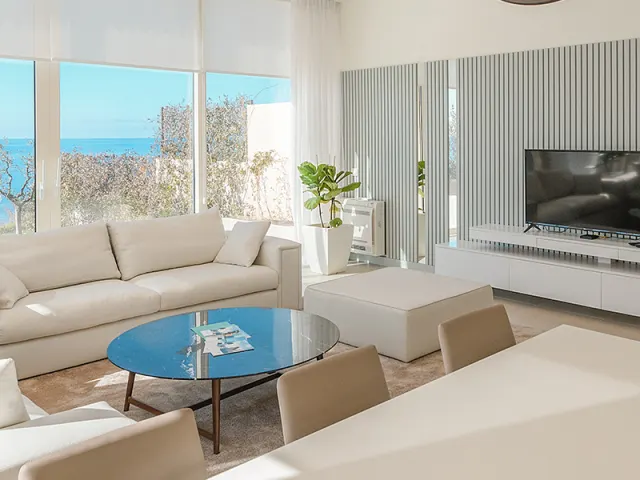
€335.000
€4.136/m²
1+1 Apartment, 81 m² – Green Coast 2, Palasë
Green Coast 2, Himara
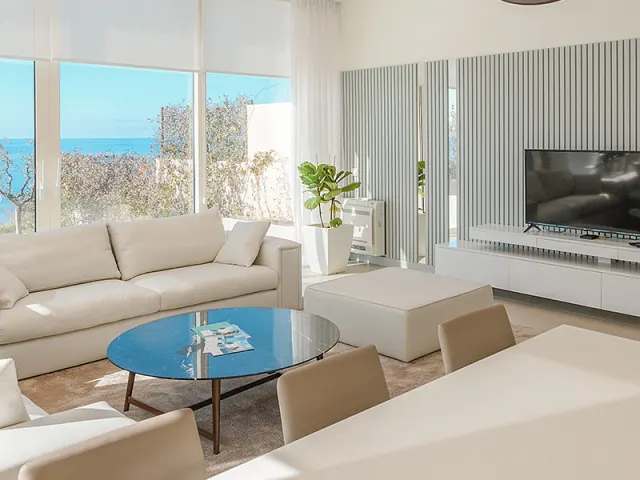
€670.000
€6.204/m²
1+1 Apartment, 108 m² with 121 m² Terrace – Green Coast 2, Palasë
Green Coast 2, Himara
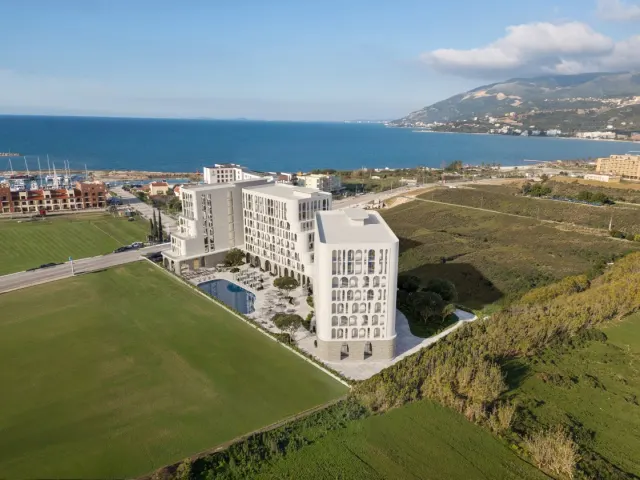
€298.700
€2.510/m²
2+1 Apartment, 119 m² with 26 m² Balcony Facing the Port – Orikum Bay, Vlorë · €298,700
Orikum, Vlora
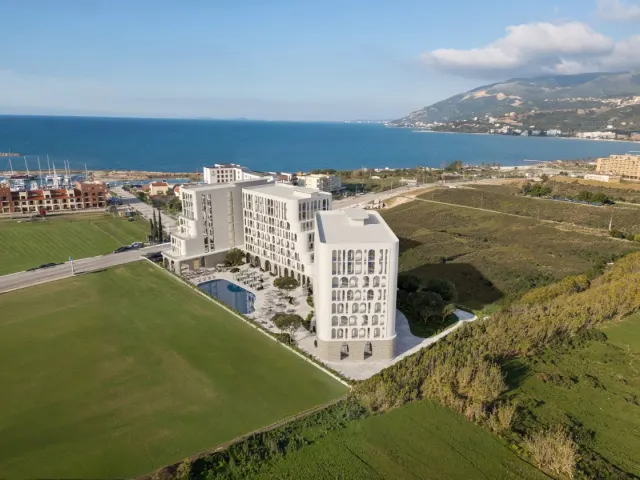
€286.752
€2.410/m²
2+1 Apartment, 119 m² with 26 m² Balcony Facing the Port – Orikum Bay, Vlorë · €286,752
Orikum, Vlora